Pramāṇa (Śāstra reference)
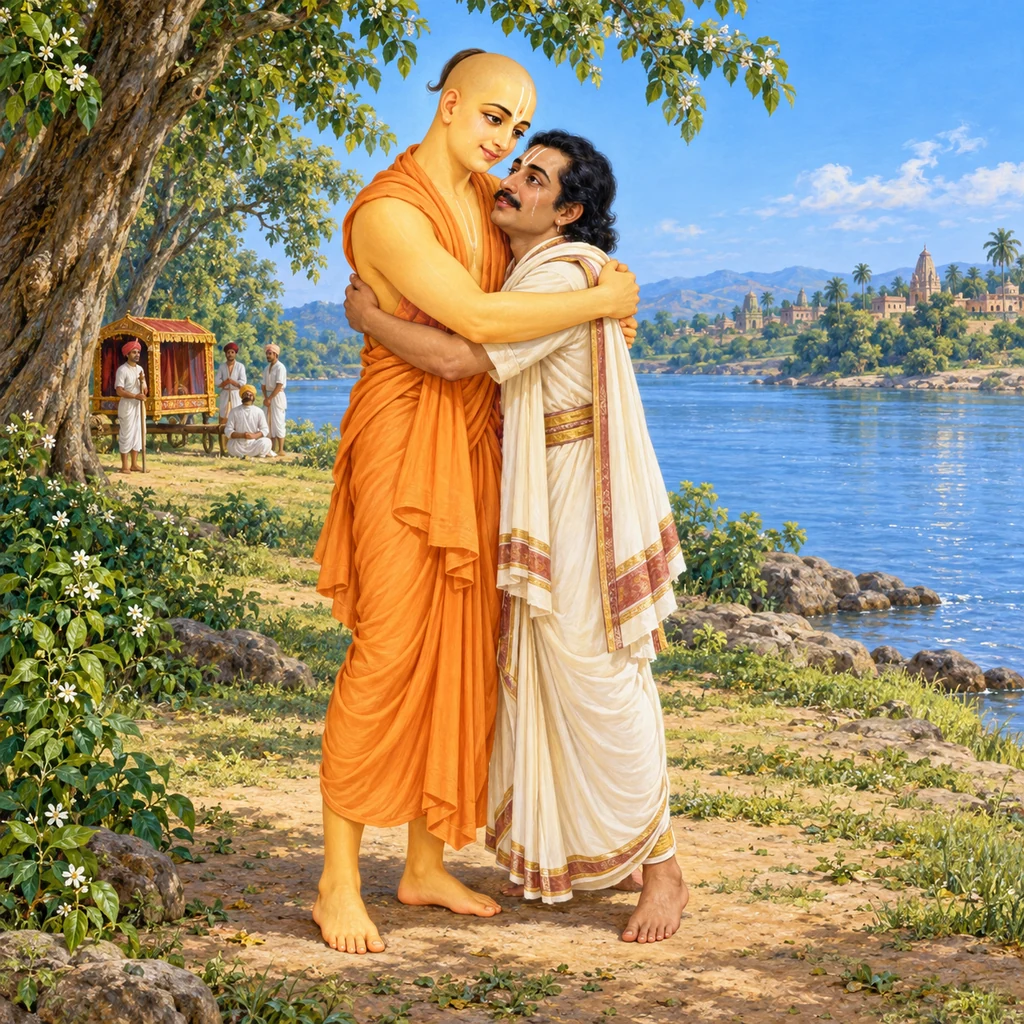
In Śrī Caitanya-caritāmṛta, Madhya 8.13–24, Rāmānanda Rāya arrives on the bank of the Godāvarī. Seeing the effulgent sannyāsī, he offers full obeisances. The Lord asks him to rise and chant Kṛṣṇa’s name, identifies him as Rāmānanda and firmly embraces him. Natural love awakens in them both: they almost lose consciousness, fall to the ground, shed tears, tremble and utter Kṛṣṇa’s name in faltering voices.
Saṅkṣepa (short meaning)
At Sārvabhauma Bhaṭṭācārya’s request, Mahāprabhu seeks Rāmānanda Rāya. Their first meeting takes place not in a palace but on the bank of the sacred Godāvarī. The Lord does not judge Rāmānanda by social position: He immediately recognizes an exalted devotee, raises him and embraces him. Thus begins the Rāmānanda-saṁvāda, a profound discussion of life’s goal and pure devotion.
Śāstra-pramāṇa (key points from the text)
Meeting on the Godāvarī
(Śrī Caitanya-caritāmṛta, Madhya 8.14)
The effulgent sannyāsī
(Śrī Caitanya-caritāmṛta, Madhya 8.18)
Obeisance and the Holy Name
(Śrī Caitanya-caritāmṛta, Madhya 8.19)
The Lord recognizes His devotee
(Śrī Caitanya-caritāmṛta, Madhya 8.20)
A firm embrace
(Śrī Caitanya-caritāmṛta, Madhya 8.21)
Tattva (essential teaching) — with śāstra
Bhakti transcends external distinctions
The Lord recognizes a sincere servant
Love manifests naturally
Hearing reveals the highest goal
Sevā today (practice for this day)
How to use this darśanam page
View the image, read the narration and śāstra-pramāṇa, contemplate the tattva, and complete the practice through seva. Follow the sequence: darśana → śravaṇa → manana → seva.