Pramāṇa (Śāstra reference)
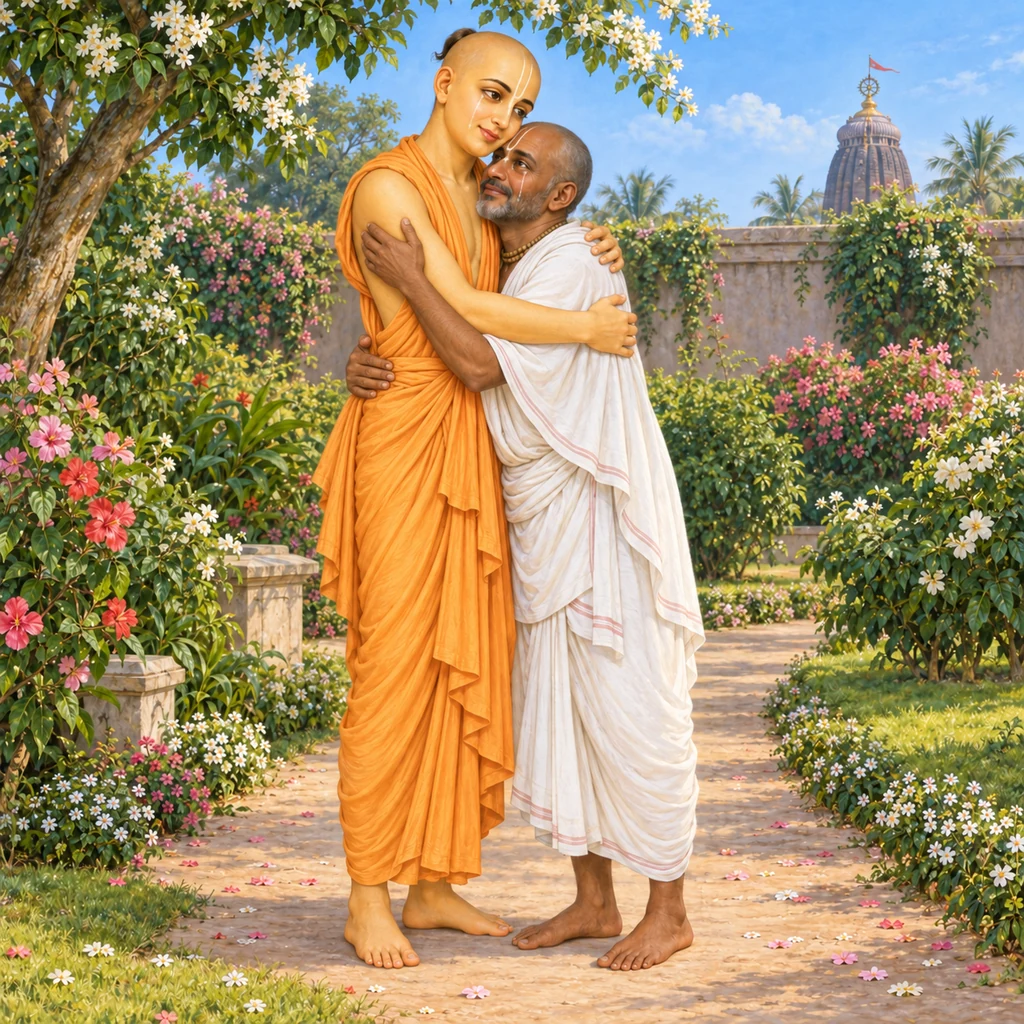
In Śrī Caitanya-caritāmṛta, Madhya 11.185–195, Mahāprabhu comes to meet Haridāsa Ṭhākura, who is lovingly chanting the Holy Name. Seeing the Lord, Haridāsa offers full obeisances. Mahāprabhu raises and embraces him, and both weep in spiritual love. When Haridāsa humbly asks the Lord not to touch him, the Lord replies that He wishes to be purified by touching him and glorifies his constant chanting. The Lord then gives Haridāsa a secluded residence in the flower garden, promises to visit daily and arranges his prasādam.
Saṅkṣepa (short meaning)
In Jagannātha Purī, Mahāprabhu personally comes to Haridāsa Ṭhākura, who is absorbed in nāma-saṅkīrtana. Haridāsa falls before the Lord, but Mahāprabhu raises and embraces him. Humble Haridāsa considers himself unfit to be touched, yet the Lord glorifies the purity of a devotee who constantly chants the Holy Name. Mercy is expressed not only in words: Mahāprabhu arranges a secluded residence, promises daily meetings and cares for Haridāsa’s prasādam.
Śāstra-pramāṇa (key points from the text)
The Lord comes to Haridāsa
(Śrī Caitanya-caritāmṛta, Madhya 11.185)
The Lord raises and embraces him
(Śrī Caitanya-caritāmṛta, Madhya 11.186)
Tears of spiritual love
(Śrī Caitanya-caritāmṛta, Madhya 11.187)
Humility meets mercy
(Śrī Caitanya-caritāmṛta, Madhya 11.189)
The Lord’s personal care
(Śrī Caitanya-caritāmṛta, Madhya 11.194)
Tattva (essential teaching) — with śāstra
The Holy Name transcends external distinctions
The Lord glorifies His servant
Humility attracts mercy
Mercy is expressed through care
Sevā today (practice for this day)
How to use this darśanam page
View the image, read the narration and śāstra-pramāṇa, contemplate the tattva, and complete the practice through seva. Follow the sequence: darśana → śravaṇa → manana → seva.