Pramāṇa (Śāstra reference)
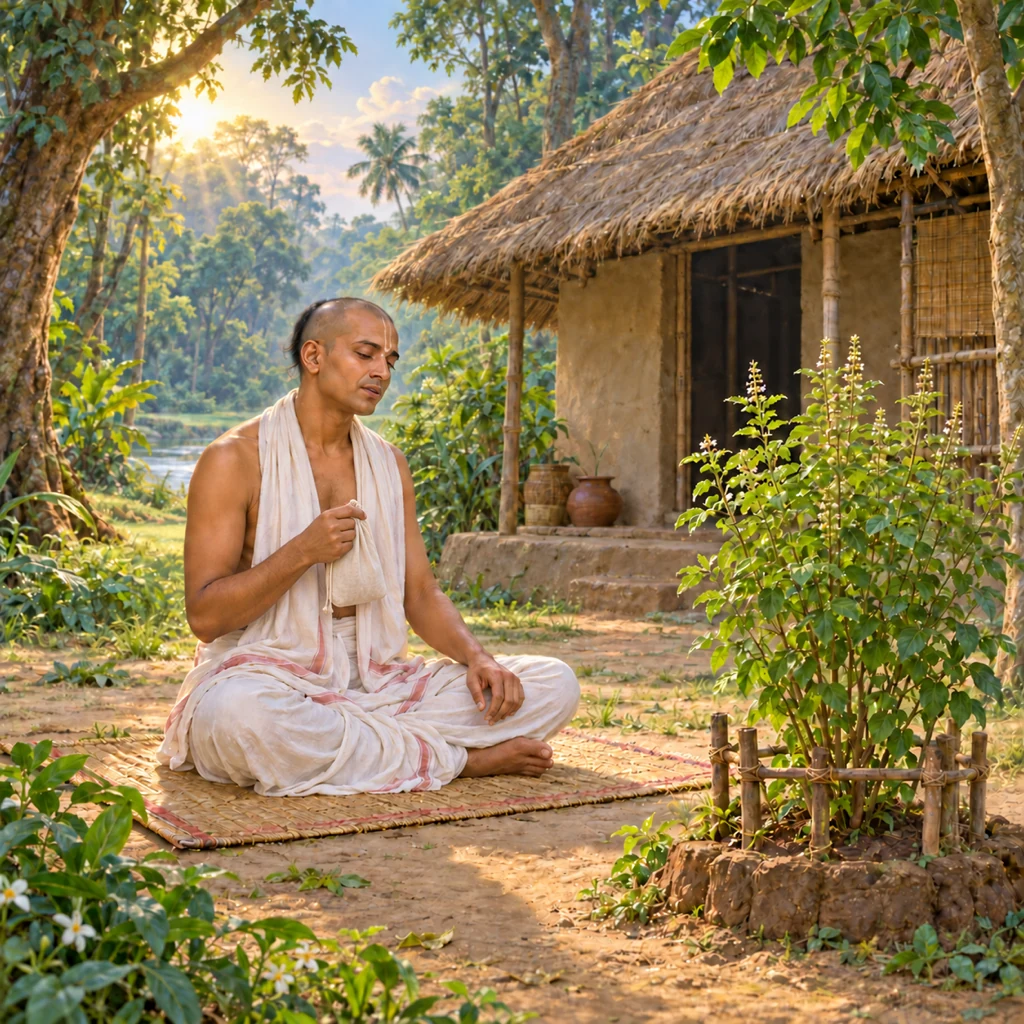
Śrī Caitanya-caritāmṛta Antya 3.99 says that Haridāsa Ṭhākura stayed for some time in the forest of Benāpola after leaving home. Antya 3.100 describes the cottage he built, his service to tulasī and his chanting of 300,000 Holy Names day and night. Verse 3.101 says that he begged food from a brāhmaṇa's home for bodily maintenance and was respected by the people nearby. This scene is in Benāpola, not the later meeting of Haridāsa with Mahāprabhu in Jagannātha Purī.
Saṅkṣepa (short meaning)
After leaving home, Haridāsa Ṭhākura stays in the secluded forest of Benāpola. He plants tulasī before a simple cottage and, while serving her, chants the Holy Name throughout the day and night. His life centers on nāma-saṅkīrtana rather than comfort or reputation. The illustration shows this quiet practice described in Antya 3.99–100.
Śāstra-pramāṇa (key points from the text)
Seclusion in Benāpola
(Śrī Caitanya-caritāmṛta, Antya 3.99)
A simple cottage
(Śrī Caitanya-caritāmṛta, Antya 3.100)
Serving tulasī
(Śrī Caitanya-caritāmṛta, Antya 3.100)
Constant chanting
(Śrī Caitanya-caritāmṛta, Antya 3.100)
Simple maintenance
(Śrī Caitanya-caritāmṛta, Antya 3.101)
Tattva (essential teaching) — with śāstra
The Holy Name at the center
Service to tulasī
Faithfulness, not imitation
Humility without display
Sevā today (practice for this day)
How to use this darśanam page
View the image, read the narration and śāstra-pramāṇa, contemplate the tattva, and complete the practice through seva. Follow the sequence: darśana → śravaṇa → manana → seva.